


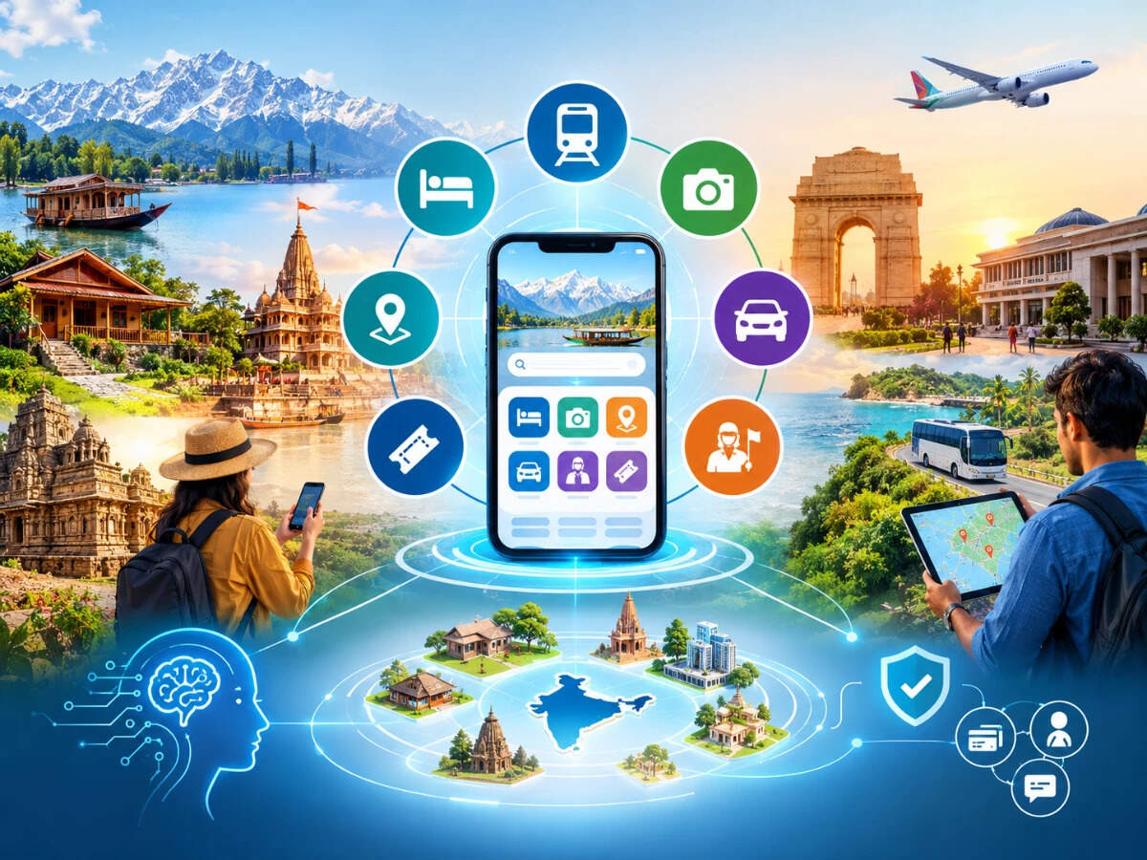
India Launches National Digital Tourism Stack and Dekho Apna Desh 2.0 to Transform Travel Experiences
Modern Tourism India | Tourism News
India has taken a significant step towards modernising its tourism industry with the launch of the National Digital Tourism Stack and the National Mission for Alternative Destinations under the Dekho Apna Desh Campaign 2.0. Announced by Union Minister for Tourism and Culture Gajendra Singh Shekhawat on 27 September 2026, during the World Tourism Day celebrations at Bharat Mandapam in New Delhi, the initiatives aim to improve digital access to tourism services, encourage domestic travel and promote lesser-known destinations across the country.
The initiatives reflect India’s broader strategy to build a more connected, inclusive and sustainable tourism ecosystem by combining digital infrastructure with destination development and community participation.
National Digital Tourism Stack to Improve Travel Discovery and Bookings
Developed in collaboration with the Open Network for Digital Commerce (ONDC), with support from the International Centre for DPI Innovation and Advancement (ICDIA), the National Digital Tourism Stack is designed to make India’s tourism offerings more discoverable, accessible and trustworthy.
The shared digital infrastructure will enable tourism service providers to make their products and experiences available through participating digital platforms. Its proposed capabilities include verified provider identities and credentials, destination and service discovery, digital payments, ratings and grievance redressal mechanisms.
For travellers, the initiative could simplify the process of researching and arranging trips by improving access to tourism services across different destinations. Rather than relying on fragmented information and separate online channels, visitors could increasingly discover accommodation, local experiences and other travel services through a more connected digital ecosystem.
The programme will be implemented in phases, with a pilot planned for January 2027. According to government announcements, the initiative is intended to support a collaborative tourism network involving the Ministry of Tourism, state governments, Union Territories and industry participants.
Dekho Apna Desh 2.0 to Promote Lesser-Known Destinations
Alongside the digital initiative, the government launched Dekho Apna Desh Campaign 2.0 under the National Mission for Alternative Destinations. The programme aims to distribute tourist footfall more evenly by encouraging visitors to explore tourism-ready destinations beyond India’s most heavily visited locations.
The initiative will focus on identifying destinations that have distinctive tourism appeal, adequate infrastructure and accommodation, and the capacity to welcome additional visitors responsibly.
Priority categories include hill and mountain destinations, coastal and waterfront locations, heritage and cultural towns, and regional pilgrimage centres. These areas offer opportunities to develop new travel experiences while helping reduce excessive pressure on established tourist hotspots.
The campaign is expected to work closely with state governments, Union Territories and tourism industry partners to develop bookable itineraries and packages that combine accommodation, transportation, meals and local experiences.
A social media-first promotional strategy, supported by digital campaigns and industry participation, will help introduce these destinations to a wider audience.
Local Communities and Small Tourism Businesses in Focus
A major objective of both initiatives is to ensure that tourism growth generates economic opportunities beyond large hotels, established attractions and major travel companies.
Local artisans, tour guides, homestay operators, self-help groups, small businesses and community organisations could benefit from improved visibility and access to travellers. Digital discovery and booking opportunities may help smaller providers reach customers who might otherwise be unfamiliar with their services.
The government also exchanged five memoranda of understanding with industry partners on World Tourism Day to strengthen tourism promotion and responsible travel.
The partners were Airbnb India, FlixBus India, Glance Digital Experience, Eicher Group Foundation and MakeMyTrip. Their areas of collaboration include homestay development and host training, destination promotion, responsible travel messaging, community-led heritage tourism in the Himalayan region and the promotion of unexplored villages and local shopping experiences.
These partnerships are intended to bring together public-sector planning, private-sector expertise and community participation to support a wider range of tourism experiences.
Technology and Artificial Intelligence in India’s Tourism Future
The launch comes as digital tools and artificial intelligence increasingly influence how travellers discover destinations, compare options and organise journeys.
AI-enabled services can potentially help visitors identify destinations suited to their interests, explore regional attractions and access relevant travel information. When supported by reliable data and participating service providers, digital systems can also improve the visibility of lesser-known destinations and make tourism services easier to find.
India is already developing other digital tourism resources, including the Incredible India Digital Platform, which provides information and virtual experiences across cultural, heritage, adventure, wellness, gastronomical, rural and other tourism categories.
The National Digital Tourism Stack is intended to complement this wider digital transformation by strengthening the connections between tourism providers, platforms and travellers.
However, the effectiveness of these initiatives will depend on implementation, the accuracy of destination information, participation by smaller businesses, digital accessibility and the availability of dependable transport and visitor facilities.
Responsible Tourism and Sustainable Destination Management
Promoting new destinations also requires careful planning. Increased visitor numbers can create pressure on local infrastructure, natural environments, cultural heritage and community resources if growth is not managed effectively.
Under Dekho Apna Desh 2.0, destination selection is expected to consider infrastructure readiness and the ability to accommodate additional visitors sustainably. Visitor data and feedback will help inform destination management and monitor tourist footfall against assessed carrying capacity.
This approach is particularly relevant for ecologically sensitive mountain regions, coastal areas and heritage towns, where responsible visitor management is essential to preserving the very attractions that draw tourists.
By linking destination promotion with sustainability considerations, the initiative seeks to support tourism growth while protecting local identity, culture and environmental resources.
What the Initiatives Could Mean for India’s Tourism Industry
The National Digital Tourism Stack and Dekho Apna Desh 2.0 represent complementary approaches to tourism development. One focuses on improving the digital infrastructure through which tourism services can be discovered and accessed; the other aims to broaden the geographical distribution of travel demand.
Together, they could create new opportunities for domestic tourism, regional travel businesses, homestays, cultural experiences and community-led tourism enterprises.
For travellers, the longer-term objective is a more convenient and diverse travel experience. For local communities, the opportunity lies in attracting visitors, supporting livelihoods and creating new markets for regional products and services.
The next stage will be translating the announcements into effective implementation, building participation across states and tourism businesses, and ensuring that destination development keeps pace with demand.
As India continues to strengthen its tourism infrastructure, the success of these initiatives will be measured not only by digital adoption or visitor numbers, but also by the quality of travel experiences, the sustainability of destinations and the extent to which tourism benefits communities across the country.
